Landing page vs website: what a business actually needs
One page for one action from one source, or a permanent home doing many jobs. Naming the job before the build saves the budget both mistakes waste.


Two ways to waste a budget here, and both are common. Build a full site to run one ad campaign. Or stretch a single page until it is carrying work it was never shaped for. Both start with the same skipped question: what is the one job this thing has?
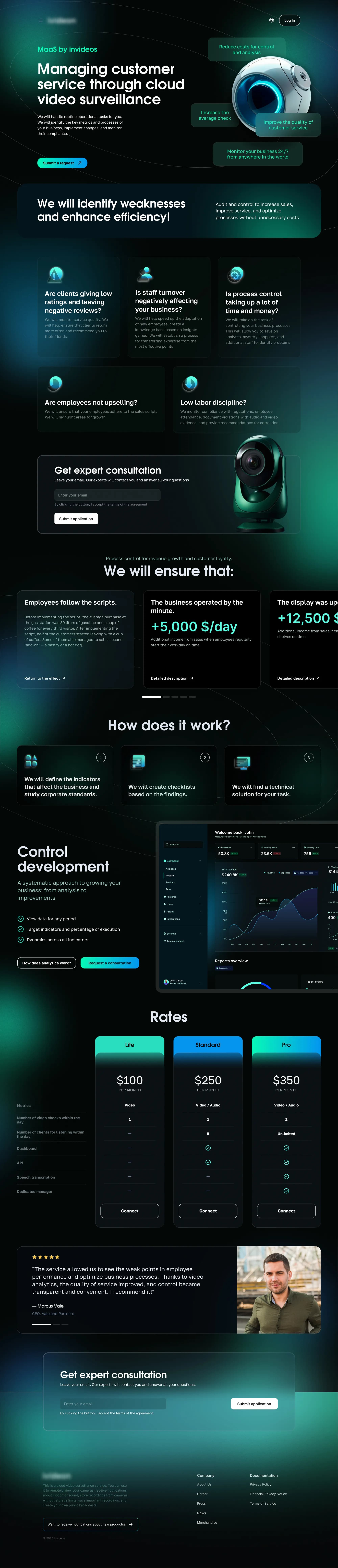
A landing page serves one campaign and one action. A website is the company's permanent home and serves many. They are different purchases wearing similar words, and the choice is decided by the goal in front of you — a single offer to sell now, or a durable place people and search systems keep coming back to.
What a landing page actually is
One page built around one decision. Someone arrives from a known source — an ad, an email, a post — and the page asks for one thing: book a call, buy, join the waitlist, download the guide. Everything points there. There is no navigation menu inviting people to wander, because wandering is how conversion leaks.
Because it does one job, it can be measured cleanly: how many arrived, how many acted, what each action cost. That feedback loop is the entire point, and it makes a landing page the right instrument for testing an offer or proving people will pay before you commit to anything larger.
What a website actually is
The permanent home, carrying many jobs at once: several services, different audiences, evidence that you deliver, answers to the questions a buyer works through before trusting you. It is where people go once they have heard your name and want to check whether you are real.
It also does slower, compounding work. It builds presence in search, accumulates pages that rank for the words your customers actually use, and gives search and AI systems structured content they can read and cite. A landing page rarely does this, because it is narrow by design. A site is broad by design, and that breadth is what keeps it findable years after launch.
Match the format to the goal
- Sell one offer to paid traffic → landing page, built around that single action.
- Validate demand before investing further → landing page, and watch the conversion rate.
- Run a launch, event or time-bound campaign → landing page tied to it.
- Present several services or speak to several audiences → website with room for each.
- Be found in search and cited by AI systems → website with depth and structure.
- Establish a durable, trusted home → website, treated as an asset rather than a project.
What happens when one does the other's job
The trap runs both ways. A landing page asked to behave like a website grows a menu, then a second page, then a blog, until it is a slow site assembled by accident with no structure search can read. A website asked to behave like a landing page buries its single most important action under navigation, and conversion suffers because visitors were handed too many exits.
So name the primary job before design starts. Conversion from a known source: focused page wins. Presence, trust and discovery across many needs: site wins. The trouble almost always begins when a business quietly changes the job after the build is finished.
Starting with one and growing into the other
Often the sensible path. Prove the offer with a landing page, fund the next step with real revenue, then expand into a site once you have more than one thing to say. The page becomes one campaign entry point inside a larger structure rather than the whole of your presence. What matters is planning that growth rather than letting a page sprawl into a site by accident — deciding what to build first and shaping it so it can grow is most of what our web and product design does early on.
The decision
Name the single job first. One action from one source: build a landing page. Presence, trust and being found across many needs: build a website. The format follows the goal, never the reverse.
Frequently asked questions
What is the difference between a landing page and a website?
A landing page serves one campaign and one action, built to convert a specific audience. A website is your permanent home, structured to do many jobs for many visitors over time.
Do I need a website or just a landing page?
Testing a single offer or running a campaign — a landing page is faster and cheaper. Explaining a business, earning trust and supporting sales over time — you need a website.
Can a landing page replace a website?
Only temporarily. It is excellent for a launch or validation, but it cannot carry positioning, credibility and multiple services the way a site does.
Keep reading
All articles
Why your website gets traffic but no leads
Traffic proves the top of the funnel works. Leads prove the rest of it does. The gap is almost always structural — and most of it is fixable in an afternoon.
Read article
How long does it take to design and build a business website?
Six to twelve weeks for a marketing site. But four of the six things that decide that number sit on your side of the table, not the studio's.
Read articleNeed a site or product that
converts?
We design responsive,
accessible websites and product interfaces that turn visitors into clients.